Roast Vegetables with Crisp Chickpeas & Tahini
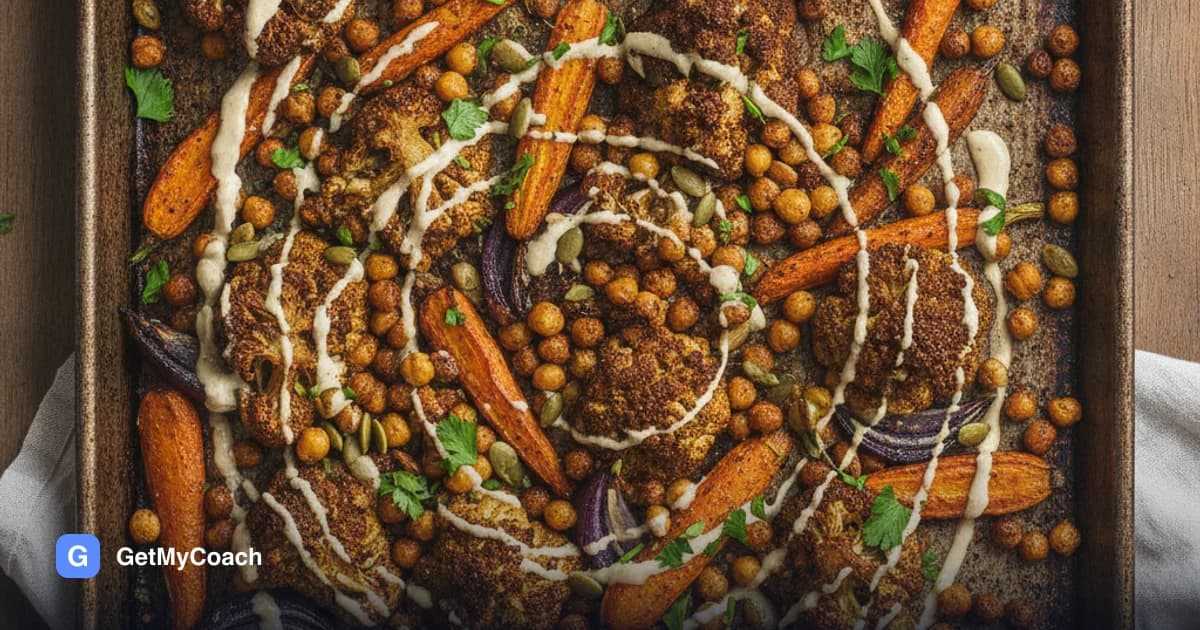
Cauliflower, carrots and red onion roasted until the edges blacken, chickpeas crisped alongside, lemon-tahini sauce poured over while it is still hot.
- Servings
- 4
- Total time
- 45 min
- Hands-on
- 15 min
What you need
- Large baking tray
- Small bowl
- Whisk
Ingredients
- 1cauliflower, about 700 g, in large florets
- 4carrots, cut into long wedges
- 2 (about 120 g each)red onions, cut into thick wedges
- 2 tins (800 g)chickpeas— drained, rinsed and dried well — about 480 g
- 4 tbspolive oil
- 2 tspground cumin
- 60 gtahini
- 1lemon, juiced
- 1 clovegarlic, finely grated
- 40 gpumpkin seeds
- 1 handfulflat-leaf parsley, chopped
How to make it
Heat the oven to 220 °C — high heat is the whole difference between roast vegetables and steamed ones. Use two trays rather than crowding one.
Toss the cauliflower, carrots and onion with 3 tablespoons of the oil, the cumin and plenty of salt, and roast for 25 minutes.
Dry the chickpeas properly on a tea towel, toss them with the last tablespoon of oil and add them to the trays for the final 15 minutes. Wet chickpeas never crisp — they just go leathery.
Whisk the tahini with the lemon juice, garlic and 4–6 tablespoons of cold water. It will seize and look ruined the moment the water goes in; keep whisking and it comes back pale, smooth and pourable. Season with salt.
Toast the pumpkin seeds in a dry pan for 2 minutes, or on the tray for the last 3 minutes.
Pile everything onto a platter while hot, pour the tahini sauce over and finish with the seeds and a lot of chopped parsley.
Per serving, roughly
- Energy
- ~554 kcal
- Protein
- ~21 g
- Carbs
- ~57 g
- Fat
- ~30 g
Calculated from the weighed ingredients in the list above, using reference values for each food (USDA SR Legacy and the Swiss food composition database) rather than an estimate. Your numbers still shift with the exact products you buy and with how generously you fill the plate.
What a serving carries
- High in magnesium~171 mg
- Source of calcium~200 mg
- High in iron~6.8 mg
- High in potassium~1298 mg
- High in zinc~4 mg
Only nutrients that most of this serving's energy actually states a value for are shown — anything else stays unknown rather than being guessed at. “Source of” and “high in” are the EU thresholds: 15 % and 30 % of the daily reference value per serving.
Variations
With grains
Serve over 60 g of cooked bulgur or quinoa per portion. About 210 kcal, 40 g of carbohydrate and 6 g of protein more — this is what turns it from a big side into a training-day main.
Winter version
Swap the cauliflower for 700 g of butternut squash and add a teaspoon of cinnamon with the cumin. Roughly 35 kcal more per portion and much sweeter against the lemon.
This version, per serving: ~589 kcal · 19 g protein · 69 g carbs · 30 g fat
Coach's tip
21 g of protein from chickpeas, tahini and seeds, with no animal products anywhere — a genuinely satisfying plant-based main rather than a plate of side dishes. On a hard training day, take the grain variation; the version here is deliberately low in carbohydrate.
More recipes
Other recipes worth a place in your week.
General information only, not medical or nutritional advice. If you have a health condition, an allergy, or specific dietary needs, talk to a qualified professional.
Eating well is half the plan
A GetMyCoach coach builds the training around your goal — and gives you a calorie and protein target that matches it.
Find your coach